
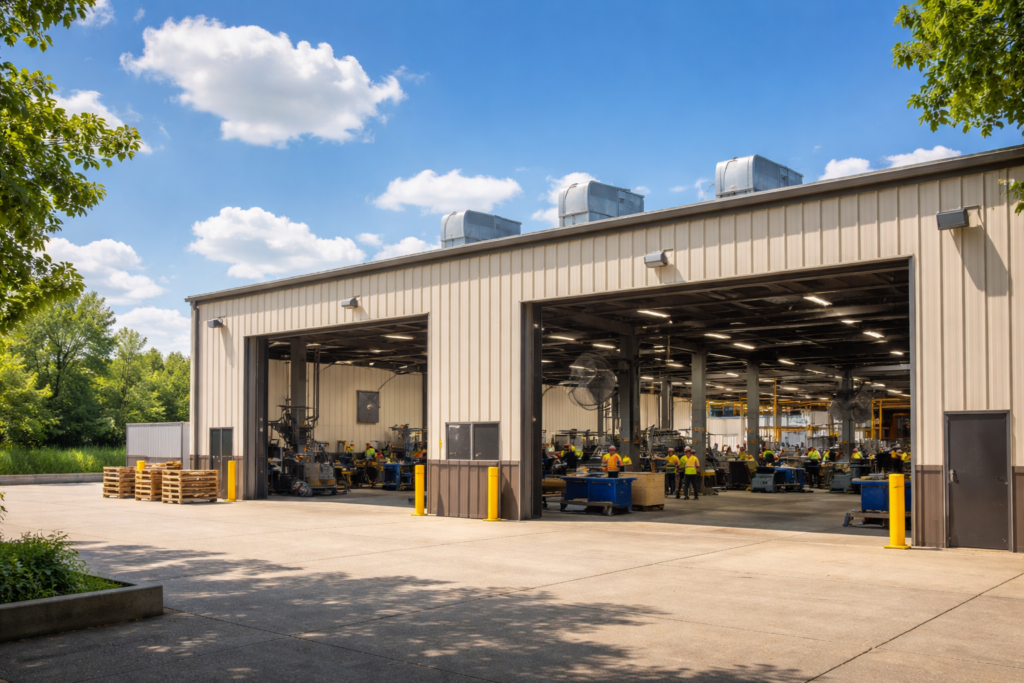
Overview Summary
- Poor ventilation leads to heat buildup, discomfort, and lost productivity
- High facility temperatures can increase safety risks and equipment strain
- Proper airflow design removes heat, contaminants, and stagnant air
- Fan selection (axial vs centrifugal) directly impacts performance outcomes
- Upgraded ventilation systems reduce energy costs and maintenance issues
- Strategic airflow improvements create long-term operational stability
Why Facility Heat Is More Than Just an Inconvenience
Heat buildup inside industrial facilities is often treated as a seasonal annoyance—but in reality, it’s a year-round performance issue.
When ventilation is inadequate, heat becomes trapped. That trapped heat doesn’t just make the environment uncomfortable, it impacts:
- Worker productivity and morale
- Equipment performance and lifespan
- Indoor air quality and contaminant levels
- Overall energy efficiency
For many facilities, especially those with heavy machinery, welding, or process heat, the problem compounds quickly. What starts as a warm workspace can turn into a costly operational challenge.
The Hidden Costs of Poor Ventilation
Facility managers and procurement teams often notice the symptoms before identifying the root cause.
Common warning signs include:
- Persistent hot zones or uneven temperatures
- Employees reporting discomfort or fatigue
- Increased reliance on temporary cooling solutions
- Equipment overheating or shutting down
- Rising energy costs without clear explanation
These issues often stem from airflow systems that were never properly designed for the current operation, or have fallen out of alignment with production demands.
For buyers and facilities leaders, this creates a familiar frustration: systems that “technically work,” but fail to deliver consistent, reliable performance when it matters most.
How Industrial Ventilation Actually Removes Heat
Effective ventilation is not just about moving air, it’s about controlling how air flows through the space.
A properly engineered system will:
- Remove hot, stagnant air at the source
- Introduce cooler, fresh air where needed
- Maintain consistent airflow patterns across the facility
- Prevent recirculation of heat and contaminants
This balance is what separates a system that simply runs from one that truly solves the problem.
Choosing the Right Fan for Heat Control
Not all industrial fans are created equal. Selecting the wrong type can limit performance from day one.
Axial Fans for High Volume Airflow
Axial fans are ideal for moving large volumes of air in low-resistance environments. They are commonly used for:
- General ventilation
- Heat exhaust in open spaces
- Wall or roof-mounted applications
Centrifugal Fans for High Pressure Applications
Centrifugal fans are better suited for systems with ductwork or airflow resistance. They are commonly used for:
- Targeted heat removal
- Process ventilation
- Dust, mist, or fume extraction systems
Choosing the correct fan type ensures that airflow actually reaches the areas where heat is being generated—not just circulating air inefficiently.
Why “More Fans” Isn’t Always the Answer
A common mistake is adding more fans without addressing system design.
This can lead to:
- Airflow conflicts that reduce effectiveness
- Increased noise and energy consumption
- Minimal improvement in temperature control
Instead, the focus should be on airflow strategy, not just equipment quantity.
That includes evaluating:
- Airflow paths and obstructions
- Intake and exhaust balance
- Equipment placement relative to heat sources
- Facility layout and expansion changes
Energy Efficiency and Long-Term Cost Savings
One of the biggest advantages of improving ventilation is the impact on energy usage.
An optimized system can:
- Reduce reliance on HVAC cooling
- Lower overall power consumption
- Minimize wear on equipment
- Decrease maintenance frequency
In many cases, facilities find that upgrading airflow systems delivers a faster return than expected, especially when compared to ongoing “temporary fixes.”
Signs It’s Time to Upgrade Your Ventilation System
If any of the following sound familiar, your system may be underperforming:
- You’re constantly adjusting airflow without results
- Heat complaints increase during production peaks
- Equipment upgrades have outpaced your ventilation system
- Your current system struggles to keep up with demand
- You’re relying on short-term fixes like portable fans
These are strong indicators that the issue isn’t capacity, it’s design and alignment.
A Smarter Approach to Facility Heat Management
Improving ventilation doesn’t have to mean a complete system overhaul.
In many cases, the most effective solutions involve:
- Re-evaluating airflow requirements
- Selecting the right fan type for the application
- Optimizing placement and system balance
- Integrating solutions with existing equipment
This approach reduces disruption while delivering measurable improvements in comfort, safety, and performance.
Better Airflow, Better Operations
Facility heat is not just an environmental issue, it’s an operational one.
When airflow is properly engineered, facilities benefit from:
- More consistent working conditions
- Improved system reliability
- Lower operating costs
- Greater confidence in day-to-day performance
If your facility is struggling with heat, airflow imbalance, or inconsistent ventilation performance, Glacier Technology can help you identify the root cause and recommend a solution that fits your operation.
Contact the Glacier team to start a conversation about improving your facility’s airflow.
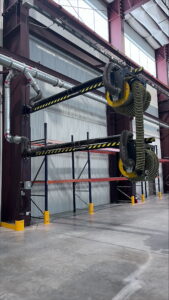 Case Study: Innovative Welding Fume Control in a State-of-the-Art Manufacturing Facility
 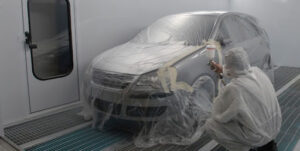 Streamlining Paint Booth Airflow: Tube-Axial Fans Meet Roll Filters for Peak Performance