 Quick Overview
- “Clean enough” air can quietly create operational risk in manufacturing facilities.
- Ambient welding fumes and dust impact equipment, productivity, and inspection readiness.
- Source capture alone does not address facility-wide airborne contaminants.
- Continuous ambient air filtration helps stabilize air quality across open spaces.
- Flexible, plug-and-play systems reduce disruption compared to major ductwork redesigns.
- Proactive air management supports compliance, uptime, and long-term cost control.
The Hidden Cost of “Clean Enough” Air in Manufacturing Facilities
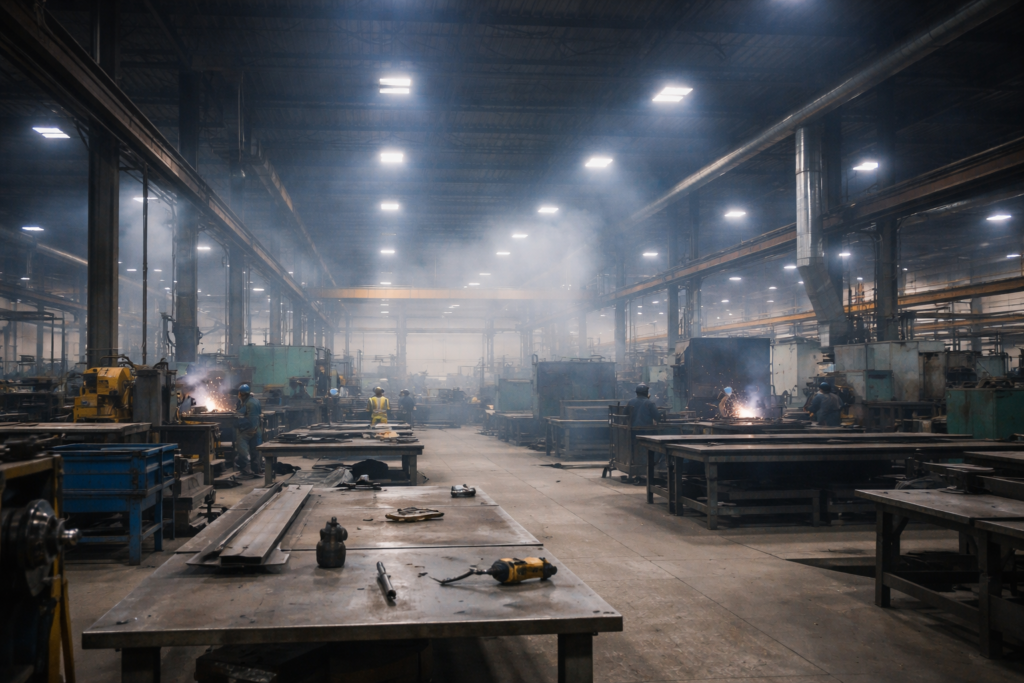
In many industrial environments, air quality problems typically begin gradually. Fine welding fumes circulate above workstations. Dust accumulates in overhead air layers. Smoke lingers beyond localized capture zones. Over time, these airborne contaminants spread across the workspace.
While OSHA compliance is often the obvious concern, the deeper issue is operational drift. When air quality degrades slowly, the consequences extend well beyond regulatory exposure.
Facilities may experience:
- Increased maintenance on CNC equipment and electronics
- More frequent HVAC filter replacement
- Worker complaints about air clarity and odor
- Contamination risks in sensitive processes
- Productivity losses that are difficult to measure but easy to feel
For facilities managers and procurement leaders, the real question becomes: Is the air system protecting long-term operational stability, or simply meeting minimum requirements?
Why Source Capture Alone Doesn’t Assure Facility-Wide Air Quality
Localized extraction arms and hoods play an essential role in welding and fabrication environments. However, they are designed to capture contaminants at the point of generation.
They do not address:
- Fugitive fumes escaping capture zones
- Particulates released during material movement
- Smoke rising and spreading across open ceilings
- Airborne contaminants drifting between work cells
In large or evolving production layouts, airborne contamination does not stay contained. Ambient air filtration systems operate differently. Instead of targeting a single source, they continuously clean the general workspace air, reducing the overall particulate load throughout the facility.
This shifts the strategy from reactive containment to continuous environmental control.
Ambient Fume Extraction as Preventative Maintenance
Air systems are often evaluated only after a problem becomes visible, due to an inspection issue, a spike in complaints, or noticeable haze on the shop floor. Continuous ambient air filtration supports a preventative approach.
Facility-Wide Air Turnover – The system captures weld fumes, smoke, and fine particulate circulating across open workspaces.
High-Efficiency Filtration – MERV 15-rated filters remove fine airborne contaminants before they accumulate in breathing zones or equipment.
Flexible Installation – Ceiling- or wall-mounted configurations allow adaptation to shifting floor layouts.
No Ductwork Requirements – Plug-and-play operation avoids major ventilation redesigns.
For facilities operating continuously or undergoing periodic reconfiguration, flexibility and minimal disruption are essential.
Reducing Inspection Anxiety Through Continuous Air Control
Inspection uncertainty is a common stress point for facilities leaders. Even well-managed plants experience pressure around unannounced OSHA visits. Documentation, air sampling, and compliance verification add layers of accountability.
Continuous ambient air filtration helps stabilize airborne particulate levels across the workspace, improving the consistency of air quality results. Instead of reacting to concerns before an audit, facilities demonstrate proactive environmental control.
That shift, from reactive correction to documented prevention, reduces both regulatory and reputational risk.
Protecting Equipment and Extending Asset Life
Airborne contaminants affect more than people, they also affect machinery. Fine particulate can accumulate in:
- Electrical cabinets
- Control panels
- Drives and motors
- Sensitive sensors
- Lighting systems
Over time, buildup increases heat retention and component wear, contributing to premature failures and unplanned downtime. Reducing ambient particulate levels helps protect capital investments and supports long-term equipment reliability.
For procurement professionals evaluating total cost of ownership, this broader operational impact matters as much as compliance.
The Role of the Shadow Ambient Fume Extractor
 The Shadow Ambient Fume Extractor from Imperial Systems is engineered to continuously clean facility air without requiring extensive ductwork or structural changes. The system offers the benefits of the standard Shadow without installation of ductwork.
Key advantages include:
- Ambient capture across the entire facility, not just individual workstations
- Simple filter cleaning – on demand pulse-cleaning while system is active
- Lift rails designed for safe and easy filter changes
- Compact footprint & powder coat finish
- Designed for indoor use – no need for outdoor installation & weather protection
- Built-in differential pressure gauges for easy monitoring
Available through Glacier Technology, the Shadow offers facilities a way to upgrade air quality control without redesigning their entire ventilation infrastructure.
Clean Air as an Operational Advantage
When ambient fume extraction is viewed narrowly, it appears to be a regulatory expense. When viewed strategically, it becomes:
- A workforce retention contributor
- A downtime reduction measure
- A maintenance cost stabilizer
- An inspection-readiness enhancer
Facilities that manage airborne contaminants proactively position themselves for long-term reliability rather than short-term fixes.
In today’s industrial environment, where uptime, safety, and accountability are intertwined, ambient air control is foundational.
Ready to Employ Ambient Fume Extraction to Improve Your Air Quality?
If your facility is relying on “good enough” ventilation, it may be time to evaluate whether continuous ambient filtration could reduce hidden risks and support long-term operational performance.
Glacier Technology works alongside facilities managers, engineering teams, and procurement leaders to evaluate air quality challenges and recommend practical, right-fit solutions aligned with production schedules and budget realities.
If you would like to explore how the Shadow Ambient Fume Extractor could support your compliance, uptime, and workforce protection goals, contact Glacier Technology to begin a conversation about your facility’s needs.
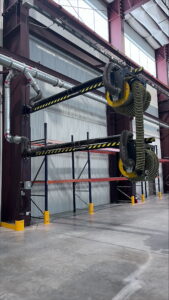 Case Study: Innovative Welding Fume Control in a State-of-the-Art Manufacturing Facility
  Streamlining Paint Booth Airflow: Tube-Axial Fans Meet Roll Filters for Peak Performance