
Key Takeaways
- Many industrial fan problems can be solved with targeted upgrades rather than full replacement.
- Common upgrade paths include motors, VFDs, impellers, bearings, and controls.
- Full replacement is often the better option when efficiency, reliability, or capacity requirements have changed significantly.
- Age alone does not determine replacement, performance data matters more.
- A lifecycle cost analysis often reveals whether repairing or replacing delivers better long-term value.
- The best decision starts with measuring airflow, static pressure, vibration, and energy consumption.
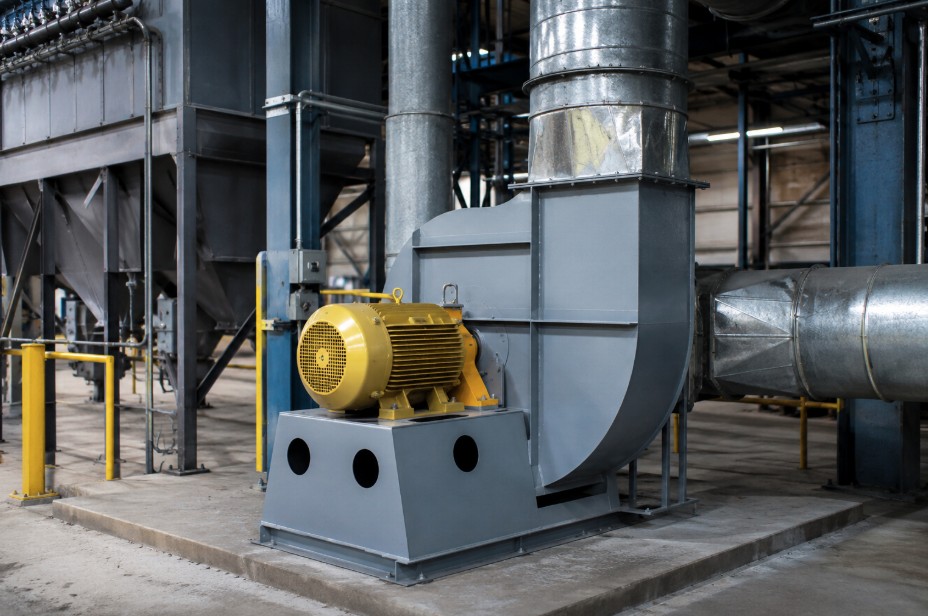
Industrial fans are often treated as “set it and forget it” equipment, until something goes wrong. A fan starts drawing too much power. Airflow drops. Noise increases. Maintenance calls become more frequent. Production suffers, and suddenly a critical question lands on someone’s desk:
Should we upgrade the existing fan, or replace it entirely?
There is no universal answer. In many facilities, an upgrade can restore performance at a fraction of replacement cost. In others, continuing to patch an aging fan becomes more expensive than installing a new system. Knowing the difference can save substantial money while reducing downtime.
When an Industrial Fan Upgrade Makes Sense
A fan upgrade is typically the right choice when the core housing and wheel are still structurally sound, but supporting components are limiting performance.
Common upgrade opportunities include:
- Motor replacement with higher-efficiency models
- Variable Frequency Drive (VFD) installation
- Bearing and shaft upgrades
- Impeller redesign or balancing
- Controls modernization
- Belt-drive to direct-drive conversion
These upgrades can improve:
- Energy efficiency
- Reliability
- Noise levels
- Airflow control
- Maintenance intervals
For example, adding a VFD can dramatically improve system efficiency in applications with fluctuating airflow demand. Instead of running at full speed continuously, the fan adjusts output to match actual process needs.
That can reduce both energy costs and wear.
Signs Your Existing Fan Is Still Worth Upgrading
Consider upgrading instead of replacing when you see these conditions:
1. The fan housing is in good condition
If the casing, wheel, and structural components show minimal corrosion, cracking, or fatigue, the fan may have plenty of life left.
2. Airflow issues are caused by system changes
Sometimes the fan is not the problem. Changes in ducting, filters, production equipment, or process loads can alter system resistance and make a previously adequate fan underperform.
3. Downtime costs make quick retrofits attractive
A targeted upgrade may require far less downtime than full replacement. For 24/7 facilities, installation speed matters almost as much as equipment cost.
4. The fan still meets most process requirements
If the fan is operating close to target performance and only needs optimization, upgrading is often practical.
When Full Fan Replacement Is the Better Choice
Sometimes upgrading becomes a temporary patch for a bigger problem. Full replacement is a more attractive option when the fan no longer fits the application or has reached the end of economical service life.
Key indicators include:
1. Chronic maintenance issues
Repeated failures involving:
- Bearings
- Motors
- Shafts
- Couplings
- Belts
These often indicate deeper system issues. If maintenance costs keep rising year after year, replacement may offer a better return.
2. Significant corrosion or structural wear
In corrosive, abrasive, or high-temperature environments, fan components eventually degrade beyond safe repair.
Watch for:
- Metal thinning
- Cracks
- Wheel damage
- Shaft wear
- Excessive vibration
These conditions can become safety risks.
3. Process requirements have changed
Your current fan may be undersized or mismatched because production changed.
Examples include:
- Higher dust loading
- Added duct runs
- New collection equipment
- Increased airflow requirements
- Higher static pressure demands
A fan designed for yesterday’s process may struggle with today’s load.
4. Poor energy efficiency
Older industrial fans often consume far more energy than modern high-efficiency designs. Even a modest efficiency improvement can produce significant annual savings in high-hour operations.
For facilities running continuously, energy savings alone can justify replacement.
How to Compare Upgrade vs. Replacement Cost
Many teams focus only on upfront capital cost, which is a mistake. A better framework is total cost of ownership.
Compare:
- Upgrade cost
- Replacement cost
- Installation cost
- Downtime cost
- Maintenance cost over 3–5 years
- Energy consumption
- Expected service life
Ask a simple question:
What option delivers the lowest cost per year of reliable operation?
Sometimes a $12,000 upgrade that buys two years is worse than a $35,000 replacement that delivers fifteen years of improved performance.
Context matters.
Performance Testing Should Come First
Before deciding, gather real operating data.
Critical measurements include:
- Airflow (CFM)
- Static pressure
- Motor amperage
- Power consumption
- Vibration levels
- Bearing temperature
- Noise levels
Without data, decisions become guesswork. This is where many facilities lose money. They replace fans unnecessarily, or continue repairing systems that should have been retired years ago. Performance testing reveals what is actually happening.
The Hidden Cost of Delaying the Decision
Facilities often postpone fan decisions because the system is still “working.” But operating in a degraded state can create hidden costs:
- Higher electrical usage
- Reduced production throughput
- Poor dust or fume capture
- Increased worker discomfort
- Greater failure risk
- Emergency replacement premiums
Waiting too long can eliminate the option of a planned upgrade and force an emergency replacement. That usually costs more.
How Glacier Technology Helps Evaluate Fan Upgrade vs. Replacement
Glacier Technology helps industrial facilities make data-driven fan decisions across manufacturing, ventilation, dust collection, and air movement applications.
Rather than defaulting to “replace everything,” Glacier helps evaluate whether an existing fan can be upgraded cost-effectively or whether full replacement makes better operational sense.
Glacier supports customers with:
- Fan system performance evaluations
- Airflow and static pressure analysis
- Replacement fan selection
- Retrofit planning
- VFD integration
- Ongoing service support
Glacier also represents leading industrial fan manufacturers, offering solutions for standard and highly specialized applications, including centrifugal, axial, high-temperature, and high-pressure systems.
Key fan partners include:
- Cincinnati Fan
- AirPro Fan & Blower Company
- Aerovent
- Daniels Fans
- National Turbine
- Venco
Whether a facility needs a targeted upgrade or a complete replacement, selecting the right solution starts with understanding system performance.
Contact Glacier Technology
If your industrial fan is showing signs of declining performance, now is a good time to evaluate your options before an unexpected failure forces a rushed decision.
Glacier Technology can help assess your current system and recommend the most practical path forward, whether that means upgrading existing equipment or selecting a replacement built for long-term reliability.
Contact Glacier Technology to discuss your fan system and explore the best solution for your operation.
 Streamlining Paint Booth Airflow: Tube-Axial Fans Meet Roll Filters for Peak Performance