
Key Takeaways
- An explosion isolation valve (EIV) helps prevent a combustible dust event (explosion) from spreading back into the building through connected ductwork and equipment.
- Many older dust collection systems were installed before current regulations of explosion isolation became a requirement.
- Retrofitting an explosion isolation device is often less disruptive and less expensive than replacing major system components.
- Fast-acting isolation valves can help reduce personal injury, facility risk, equipment damage, and downtime.
- The VigiFlap Explosion Isolation Valve is designed to provide passive mechanical isolation, this fast acting valve reacts based on the explosion’s pressure wave.
- Facilities evaluating combustible dust risks should consider whether existing systems have adequate isolation protection. Glacier Technology will help you through this process.
A Critical Component of Combustible Dust Protection
Facilities spend significant time and resources maintaining industrial dust collection systems, filters, fans, and ductwork. Yet many facilities still overlook one of the most critical components of combustible dust protection: explosion isolation.
While dust collectors often receive the most attention when discussing combustible dust hazards, an explosion rarely remains confined to a single piece of equipment. Without proper isolation, pressure waves and flame fronts can travel through connected ductwork and spread to other areas of a facility.
For many plants operating older dust collection systems, adding explosion isolation protection may be one of the most impactful safety upgrades available.
What Is Explosion Isolation?
Explosion isolation is designed to prevent an explosion from propagating beyond its point of origin.
In a combustible dust event, rapidly expanding gases can create a pressure wave that travels through ductwork. This pressure wave can carry flames and burning particles into connected equipment, potentially creating secondary explosions that are often more damaging than the initial event.
Explosion isolation devices are intended to stop this chain reaction by automatically blocking the pathway between connected process equipment.
Typical applications include:
- Dust collectors
- Cyclones
- Process vessels
- Conveying systems
- Bucket elevators
- Material handling systems
- Industrial ventilation systems
Without effective isolation, a single incident can quickly affect multiple pieces of equipment and larger sections of a facility.
Why Existing Dust Collection Systems Often Lack Adequate Isolation
Many industrial dust collection systems were installed years or even decades ago. While these systems may still perform their primary dust collection function effectively, explosion protection standards and industry best practices have evolved considerably.
Facilities commonly discover that:
- Existing systems were designed before current combustible dust guidance was widely adopted
- Process changes have altered dust characteristics over time
- Facility expansions have created additional interconnected equipment
- Original protection strategies no longer reflect current operational risks
- Isolation protection was never included in the original design
As facilities conduct combustible dust evaluations and safety reviews, explosion isolation frequently emerges as a gap that can be addressed through retrofitting rather than complete system replacement.
The Value of Retrofitting Explosion Isolation
One of the most attractive aspects of modern explosion isolation technology is that it can often be integrated into existing systems.
Rather than replacing a functioning dust collector, facilities can enhance protection by installing isolation devices at strategic points within the system.
Potential benefits include:
- Reduced risk of explosion propagation
- Improved personnel safety
- Better protection for connected equipment
- Reduced potential downtime following an incident
- Support for combustible dust risk management efforts
- Cost-effective modernization of existing systems
For facilities facing budget constraints, retrofitting can provide a practical path toward improved protection without requiring a major capital project.
How the VigiFlap Explosion Isolation Valve Works
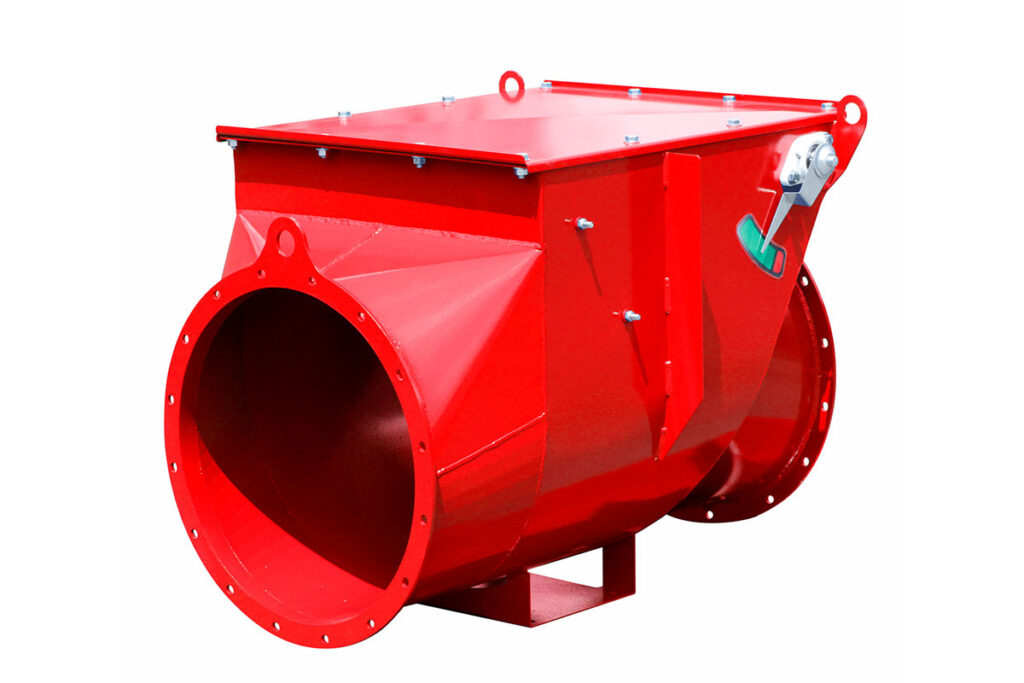
The VigiFlap Explosion Isolation Valve from Boss Products is a passive mechanical explosion isolation device designed to prevent flame and pressure propagation in industrial duct systems.
Unlike active isolation systems that may require sensors, controls, compressed air, or electrical connections, the VigiFlap valve operates using the energy generated by the explosion itself.
When an explosion pressure wave reaches the valve, the flap rapidly closes, creating a barrier that helps prevent flames and pressure from continuing downstream through the ductwork.
Key advantages include:
- Passive operation
- No external power requirements
- No electronic controls
- Fast response to explosion pressure waves
- Suitable for retrofit applications
- Designed for industrial dust collection and process systems
Because it functions mechanically, the valve can provide a straightforward solution for facilities seeking reliable isolation protection with minimal system complexity.
Applications Where a VigiFlap Retrofit Makes Sense
A VigiFlap retrofit may be worth evaluating if your facility:
- Operates an older dust collection system
- Has recently completed a combustible dust hazard assessment
- Has added equipment or production lines over time
- Is reviewing compliance and safety initiatives
- Handles combustible metal, wood, grain, food, chemical, or plastic dusts
- Wants to improve protection without replacing existing collection equipment
In many cases, the retrofit can be incorporated into a broader dust collection optimization project while minimizing disruption to production.
Working with Glacier Technology on Explosion Protection Upgrades
Explosion protection is rarely a one-size-fits-all decision. Every facility has unique dust characteristics, process conditions, airflow requirements, and equipment layouts.
Glacier Technology helps manufacturers evaluate existing dust collection systems and identify practical opportunities to improve safety, performance, and compliance. For facilities considering combustible dust protection upgrades, the VigiFlap Explosion Isolation Valve can be an effective retrofit solution that enhances protection without requiring a complete system replacement.
If your facility is reviewing combustible dust risks or evaluating explosion protection options for an existing system, contact Glacier Technology to discuss your application and determine whether a VigiFlap retrofit may be appropriate.
 NFPA 660: What Facilities Need to Know About the New Combustible Dust Standard