
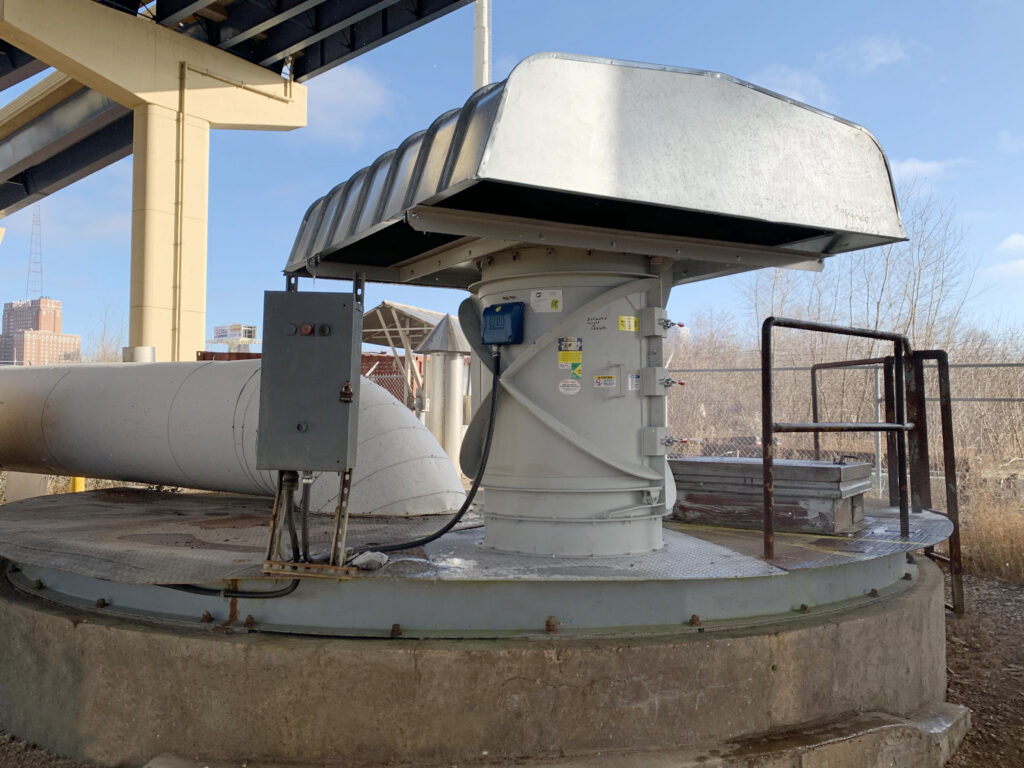
Tubeaxial, Vaneaxial and Mixed-Flow Fan Solutions
Selecting the right industrial fan requires more than determining how much air needs to move. Airflow requirements, static pressure, operating conditions, available space and system configuration all influence fan performance.
For industrial ventilation and process air applications, tubeaxial, vaneaxial and mixed-flow fans offer different performance characteristics. Understanding these differences can help manufacturers improve airflow efficiency, reduce operating costs and avoid costly equipment selection mistakes
Key Takeaways
- Tubeaxial fans provide high-volume, straight-through airflow for applications with relatively low static pressure requirements.
- Vaneaxial fans incorporate guide vanes to develop higher static pressure, making them suitable for more demanding industrial ventilation systems.
- Mixed-flow fans combine characteristics of axial and centrifugal designs, offering compact configurations and versatile pressure performance.
- Selecting the right industrial fan requires evaluating airflow, static pressure, airstream characteristics and installation requirements.
- Energy efficiency, maintenance accessibility and operating conditions influence long-term fan performance and cost.
- Working with an experienced industrial fan supplier helps ensure equipment is properly matched to the application.
Why Choosing the Right Industrial Fan Matters
Industrial fans are essential components in manufacturing ventilation, process air systems and industrial exhaust applications. When a fan is improperly specified, the consequences can extend beyond inadequate airflow.
An incorrectly selected fan may consume excessive energy, generate unnecessary noise, require frequent maintenance or fail prematurely.
Different fan designs address different airflow and pressure requirements. Understanding how tubeaxial, vaneaxial and mixed-flow fans operate is an important first step toward selecting equipment that delivers reliable performance.
Tubeaxial Fans: High-Volume Airflow for Lower-Pressure Applications
Tubeaxial fans use an axial impeller mounted inside a cylindrical housing to move air parallel to the fan shaft. Their straightforward design provides efficient, high-volume airflow in applications where system resistance is relatively low.
Because tubeaxial fans can be installed directly within ductwork, they are frequently considered for industrial ventilation systems requiring a compact, inline configuration.
When Should You Consider a Tubeaxial Fan?
Tubeaxial fans are well suited for applications involving:
- General industrial supply and exhaust ventilation
- Large-volume air movement with relatively low static pressure
- Warehouse and manufacturing facility ventilation
- Process ventilation with limited duct resistance
- Inline duct installations requiring straight-through airflow
Tubeaxial fans are generally less suitable for systems with significant pressure losses from extensive ductwork, filtration equipment or other restrictions.
For these applications, a vaneaxial or mixed-flow design may offer better performance.
Vaneaxial Fans: Higher Static Pressure for Demanding Ventilation Systems
Vaneaxial fans share the cylindrical housing and straight-through airflow configuration of tubeaxial fans. However, they incorporate stationary guide vanes that help straighten the airflow leaving the impeller.
These guide vanes improve pressure development, allowing vaneaxial fans to operate effectively against greater system resistance.
Vaneaxial fans are often considered when an application requires substantial airflow combined with moderate to high static pressure.
When Should You Consider a Vaneaxial Fan?
Vaneaxial fans are worth evaluating when an application requires:
- High airflow capacity with increased static pressure
- Industrial ventilation through ducted systems
- Process air movement with greater system resistance
- Compact, inline installation
- Specialized configurations for demanding operating conditions
Depending on the manufacturer and model, vaneaxial fans may be available with direct-drive or belt-driven configurations, adjustable-pitch impellers and specialized construction options.
These capabilities allow engineers to select equipment based on the system’s specific performance requirements.
Mixed-Flow Fans: Combining Axial and Centrifugal Fan Advantages
Some industrial ventilation applications require more pressure capability than a conventional tubeaxial fan can provide but have limited space for traditional centrifugal fan configurations.
Mixed-flow fans offer an alternative by combining characteristics of axial and centrifugal fan designs.
Their impellers move air using both axial and radial components, allowing them to develop useful static pressure while maintaining a relatively compact, inline arrangement.
Depending on the design, mixed-flow fans may also offer favorable efficiency and acoustic performance at the intended operating point.
When Should You Consider a Mixed-Flow Fan?
Mixed-flow fans are frequently considered for:
- Industrial supply and exhaust ventilation
- Commercial and industrial air handling
- Process ventilation involving suitable airstreams
- Space-constrained inline installations
- Applications where noise and energy efficiency are important considerations
Mixed-flow fans can provide a practical solution when engineers need to balance airflow, pressure capability, installation space and operating efficiency.
However, actual performance varies by model. Fan selection should always be based on the required system operating point rather than general assumptions about fan type.
Tubeaxial vs. Vaneaxial vs. Mixed-Flow Fans: Which Is Right for Your Application?
Although these three fan designs share certain characteristics, they are not interchangeable. Each offers advantages for different ventilation and process air requirements.
| Fan Type | Primary Advantage | Typical Applications |
| Tubeaxial | High-volume airflow with relatively low system resistance | General ventilation, industrial exhaust and low-pressure duct systems |
| Vaneaxial | Higher static pressure capability with straight-through airflow | Ducted industrial ventilation and process air systems |
| Mixed-flow | Compact inline design with versatile airflow and pressure performance | Industrial exhaust, air handling and space-constrained ventilation |
This comparison provides a starting point, but the performance ranges of individual fan models can overlap. Final selection requires evaluating actual airflow and static pressure requirements against manufacturer performance data.
Five Factors to Consider Before Selecting an Industrial Fan
Regardless of fan type, several engineering considerations should guide equipment selection.
1. Airflow and Static Pressure
Determine the required airflow, typically expressed in cubic feet per minute (CFM), and the total static pressure the fan must overcome. Both are necessary to establish the appropriate operating point.
2. Airstream Characteristics
Consider operating temperature, moisture, chemical exposure and particulate loading. These conditions influence fan design, materials of construction and available configuration options.
3. Energy Efficiency
Evaluate fan efficiency at the intended operating point rather than relying exclusively on maximum published efficiency. A properly selected fan can help reduce energy consumption throughout its operating life.
4. Installation and Maintenance
Review available installation space, ductwork configuration, access requirements and maintenance needs. Compact fan designs may simplify installation, but accessibility remains important for long-term reliability.
5. Long-Term Operating Costs
Initial equipment cost is only one consideration. Energy consumption, maintenance requirements, expected service life and potential downtime all contribute to total ownership costs.
Industrial Fan Solutions from Glacier Technology
Glacier Technology, we understand that industrial fan selection requires careful consideration of both performance specifications and real-world operating conditions.
We offer industrial fan solutions from established manufacturers, including Aerovent, AirPro and Cincinnati Fan, providing options for a wide range of ventilation and process air applications.
Aerovent Industrial Fans
Aerovent offers a broad selection of industrial fans, including tubeaxial, vaneaxial and mixed-flow designs. Its axial fan lineup includes direct-drive and belt-driven configurations, along with specialized options for demanding industrial environments. Aerovent also offers mixed-flow solutions for applications requiring compact installation and versatile airflow performance.
AirPro Industrial Fans
AirPro develops vaneaxial and mixed-flow fan solutions for industrial ventilation and process air applications. These products provide additional options for applications requiring higher static pressure, compact inline configurations or specialized performance characteristics.
Cincinnati Fan Tubeaxial Fans
Cincinnati Fan is the source for tubeaxial duct fans designed for industrial air movement and ventilation applications. These fans provide an option for systems requiring high-volume airflow, relatively low static pressure and straight-through duct installation.
By working with multiple manufacturers, we can help customers evaluate different fan designs and identify equipment suited to their performance requirements, operating conditions and installation constraints.
Whether you’re designing a new ventilation system, replacing existing equipment or evaluating opportunities to improve airflow performance, our team can help you compare available solutions.
Contact the Glacier Technology team to discuss your industrial fan requirements and find the right solution for your application.